Illusions of progress are persistent. Progress in most cases entails pursuit of better standards of living (deemed good) or more accurate information (deemed true) or a combination of true and good that works to the detriment of both concepts. This last effect is troubling as much for architecture as any other aspect of life.
Architecture traditionally established its distance from mere buildings and utilitarian engineering projects primarily in providing experiential qualities or symbolic content that enriched the lives of inhabitants or the community. “Buildings become Architecture when they bear witness to who we wish to be,” is a recent formulation of this thought.[i]In other words, constructions that merely served a purpose but granted nothing else to humanity were not considered for inclusion in the category of architecture. Buildings that perhaps served their intended function less well but were beloved or enriching were. Conflating true and good, however, has expanded notions of what counts as architecture in some ways and greatly curtailed it in others. The expansion of what counts as architecture, for instance, is evidenced in the numerous well-engineered buildings – buildings that solve unique structural or pressing environmental problems – that are regularly praised as good architecture in lectures, journals, and increasingly in the popular press despite being experientially or symbolically unfulfilling. Much of today’s sustainable architecture is arguably, and perhaps quantifiably, “sustainable” but only exists as “architecture” in a narrow sense that leaves behind the meaning architects traditionally sought to provide. The same can be said of most humanitarian-focused buildings where the goodness of the clients’ mission, or the building’s program, seems enough to trump the banal experiences provided by the actual configuration of steel and glass and concrete. These garner the label “architecture” despite the reality.
The narrowing of the discipline caused by conflating good and true tends to come at the expense of popular notions of architecture. If good means true, things deemed fake or insubstantial are rejected as ethically or morally bad. This is one of the reasons many architects and critics cringe at theme park facilities, roadside attractions, carnival enclosures, folk art structures, and other pop culture follies being labeled as architecture. In my experience, these buildings’ artificiality (whatever that means) is the dominant reason they are denied architectural status by the discipline’s defenders, with a few notable exceptions such as the late Robert Venturi and a Reyner Banham. This denial stands in stark contrast to the wishes and desires and joys of the vast majority of non-architects – i.e. nearly the entirety of humanity – whose love for what they love and needs for experiential and symbolic fulfillment are judged insignificant next to the discipline’s perceived need for progress understood as truth and justice.
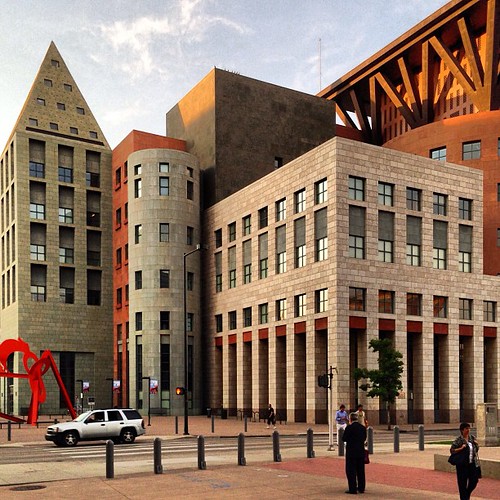
Changing definitions of the discipline are possibly evidence of nothing more than changing times. That response is common. Changing definitions could also be a form of avoidance. The spectre haunting architecture lurks between the lines in the two preceding paragraphs. The blurring of true and good has a corollary in judgments of significance in architecture as in other disciplines – perhaps more so. What is judged as scientifically or philosophically true or morally or ethically good is honored as important. Buildings judged as true or good are pressed into service as architectural talisman or icons to exorcise the spectre of meaninglessness. Cynically speaking, you need only point to them for proof that architecture is important. The existence of all else is either denied the status of reality in some way or proclaimed ‘architecture’ but only as an act of heresy. The profession’s attitude toward most of the works of the late Michael Graves is an easy example of the latter (figure 1).
[i] Benedikt, Architecture Beyond Experience, 122.
 Architecture is Fiction