The question appears simple. Almost everyone who thinks about it for any length of time, of course, realizes meaning is easy to feel or intuit but far from simple to frame in language. The more we reflect, the muddier things get. In fact, the word “feel,” a couple of sentences ago, isn’t correct. Nor is “easy.” Pressed to find a workable sentence that doesn’t strain doubt, we are left with the banal: meaning is experienced – an “in the eye of the beholder” or “I know it when I see it” sort of answer. Clearly this isn’t sufficient to support meaning-oriented practice. And clearly it isn’t simple.
Uncontroversial but unsatisfying, the phrase “meaning is experienced” is also empty. Even if narrowed and re-stated in the form of a hypothesis along the lines of “architectural meaning is the experience of an experience in and of architectural space,” the phrase requires specification on a host of fronts – who, what, where, when, and how – before we can determine why, or even if, it matters?
To rescue the hypothesis from hopeless abstraction, it must be thought through particular lived experiences of real human beings. As the author, and almost certainly a human being, the experiences I have most unfettered access to are my own. Two radically divergent experiences of architectural meaning drawn from my own life therefore serve as primary examples for the bulk of these meditations: encounters with the Pantheon in Rome and my grandparent’s basement in rural southwest Mississippi.
The Pantheon (figure 2) is one of the most famous buildings in the world located in one of the most famous cities. As such, the place does not require description here. My most memorable experience of it, however, does.
As a young assistant professor, I arrived in Rome in late winter on a Sunday morning where I was met at Fiumicino airport by a colleague who had been in the city for a few days and, being better traveled than I, knew the Eternal City well. He was a seasoned architectural educator and good friend. As such, he had planned a walking tour for that first day aimed both at orienting me to the city and keeping me awake long enough to offset the worst of Monday’s impending jet lag. Unbeknownst to me, due to my disorientation from both lack of familiarity with the place and exhaustion, his tour was brilliantly planned. It was early evening when we turned a corner, walking east along the Salita dei Crescenzi, and I glimpsed the sunset-tinted side of an ancient portico ahead.
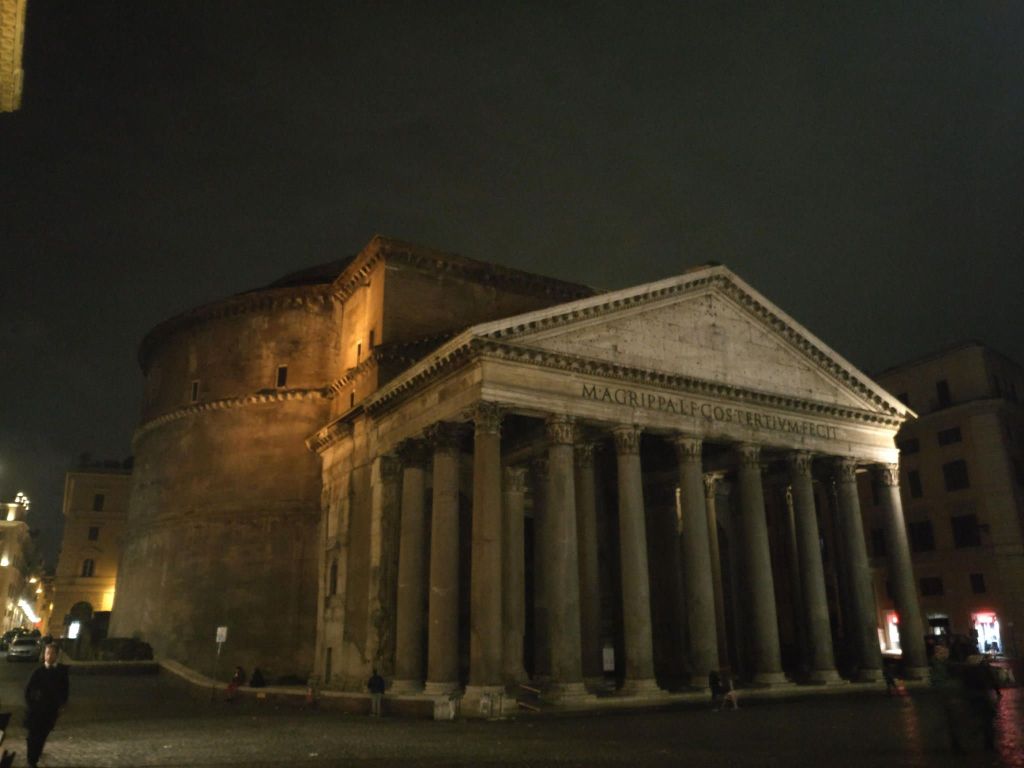
It took me a few steps to realize where I was: the Pantheon at the limits of wakefulness. The moment of realization was powerful. My eyes glazed. I literally shook as we turned in the piazza to face the portico head on. And then we entered and stood among clusters and echoes of others. Unexpected tears fell under the dome.
Half a world away, outside the small town of Brookhaven, the home my paternal grandparents built on the family dairy farm still exists. It is a little wood-frame and brick veneer ranch house one hill away from the ranch house my parents built about three decades later. Unlike most in southwest Mississippi, my grandparents’ home had a basement (figure 3). This feature was an artifact of my grandmother growing up in Michigan, my grandparents meeting and marrying there, and only subsequently relocating to the Mississippi farm of my great grandparents. The lack of basements in other Brookhaven houses was and is a response to the high-water table as well as winters so mild that people can spend significant recreation time outdoors year ’round.
I don’t remember when I first descended into my grandparents’ basement. By the time I became aware I was fascinated by it, it seemed I had been wandering down there since my birth. It was modest in size, form and materials – perhaps 1200 square feet (111 square meters), a perfect rectangle save the niche under the kitchen, a low dark ceiling constructed of wood floor joists sixteen inches on center, with a concrete floor and concrete block walls that allowed water to seep in year round. There were, and still are I presume, small windows, maybe eight by sixteen inches wide (20 x 40 cm), evenly spaced along the top of the south and east walls. The clean out for the fireplace above and a cast iron furnace occupied the dark northwest corner.
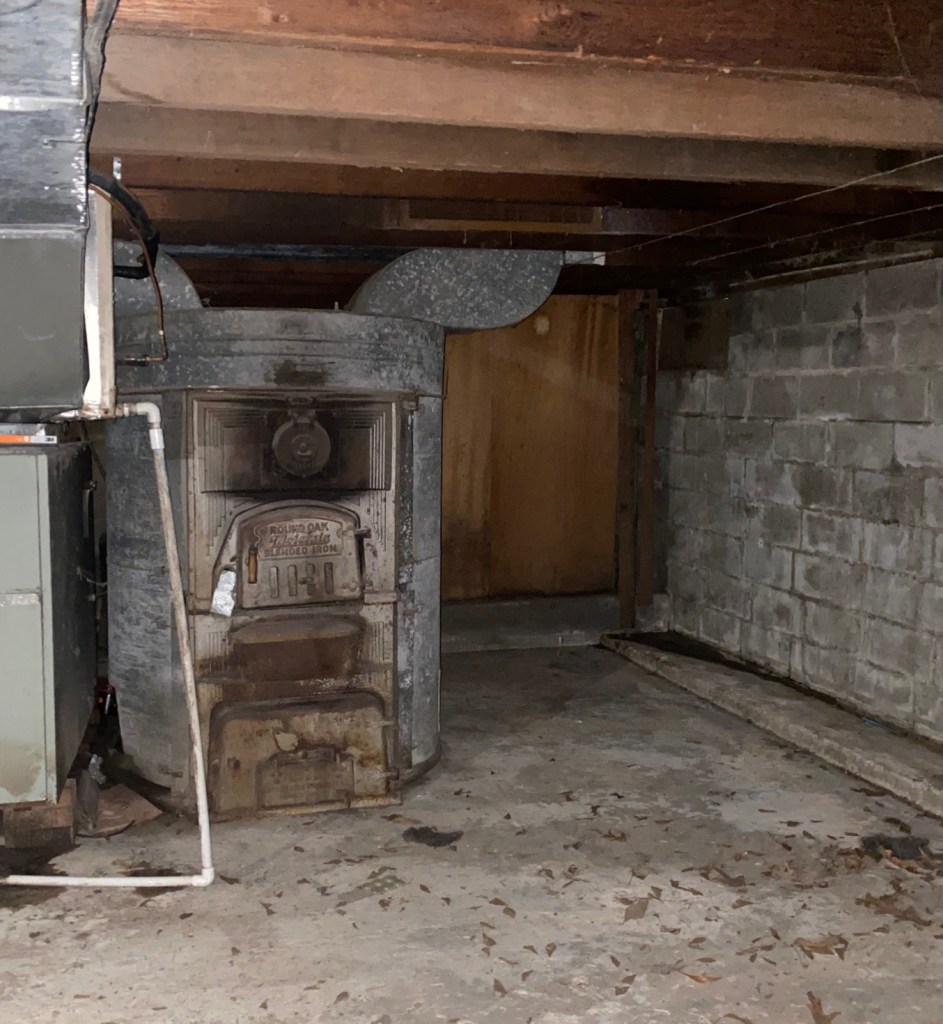
The basement served many functions for me over the years. I learned to roller skate there as a young kid. In high school, I played billiards on a cheap secondhand table. But it was a recurring non-pragmatic experience there that forged a place in my memory. By the time I was ten or eleven, I approached that space like an explorer. It was dark and mysterious even in mid-day in mid-summer. There was an ever-present touch of moisture, the smell of mildew, and – especially when I was alone – the faintest sounds of life on the floor above that made the space feel even more removed from the world, like the sounds heard while underwater. The dark corner behind the furnace and the nook under the kitchen, filled with shelves of canned vegetables from the garden, some probably older than me, evoked the sense that I was in touch with a world far older and more real than the one above.
It should be obvious that these two examples differ nearly as much as possible within the experience of a single individual: in terms of geography, relation to the ground plane, time of year, time of day, proximity to and number of others, my age, my education, accrued life experiences, my personal relationship to place, its familiarity, its age, its historical importance, etc. I will flesh out both experiences at various points over the course of the meditations. Still, it is recommended that readers conjure two similarly divergent experiences from their own lives to compare and contrast with mine.
 Architecture is Fiction